New England Home Connecticut Spring 2014

____________________________________________________________

New England Home 1

____________________________________________________________

New England Home 2

____________________________________________________________

New England Home 3

____________________________________________________________

New England Home 4

____________________________________________________________

____________________________________________________________

Conservation and Restoration

CONSERVATION AND RESTORATION

In discussing the appraisal and care of antique furniture, the words conservation and restoration are both frequently heard. The two terms are sometimes used interchangeably; at other times some distinctions are implied.  In the following, I offer some basic information gathered from various sources, along with some observations of my own, as an interpretation of how these terms might be used.

Generally speaking, objects conservation refers to the activities of a knowledgeable conservator, who, after examination of an aging or damaged object, will attempt to arrest deterioration, provide stability, possibly address visual/aesthetic concerns, and recommend a strategy for preservation management.  This work will be carried out according to accepted codes and guidelines, such as complete documentation of the work undertaken, a minimal amount of intervention using the least invasive methods, and the use of stable reversible materials that will allow access for future alternative conservation treatments. Other essential requirements are that the conservator will take into account the views of the client, and the cultural heritage of the object.

Regarding the term restoration, if we acknowledge a difference in meaning of the words conservation and restoration, I suggest it might arise from the common understanding of the familiar word “restore”, which according to most dictionary entries is something like “a return of something to an original or unimpaired condition, a former state, a reconstruction”.  With this in mind, restoration might be understood as being similar to the description of conservation above, while allowing for the activities of the conservator to proceed beyond some of the limitations implied above. A decision to pursue restoration, as here defined¹ ,would be the result of careful deliberation, and would be carried out according to the same conservation guidelines mentioned above. Examples of such actions might be the removal of varnish, replacement of missing parts, the in-painting of losses, and other efforts of this nature undertaken with the intention of enhancing the viewer’s aesthetic experience.

Alternatively, it sometimes occurs that a restorer² is presented with an object whose needs are so extensive that the required work might be regarded as more of a re-creation than a restoration.  Examples of this might be an extension table that no longer possesses its leaves, or a gilded mirror frame that has lost its crest ornaments and/or pendant foliage, or a satinwood table that at some point had all of its painted decoration removed. In these types of cases, where there is no original substance to preserve, it might be considered acceptable if the restoration is undertaken using the same methods and materials that would have been used at the time the object was made.  In so doing, the chances of success are probably increased, and with experience and careful research, a very convincing result might be achieved.

Finally, in my own work, I do find it useful to assign separate meanings to these two words, usually in the context of a conversation with a client. For instance, when considering possible courses of action in regards to a particular project, I may find myself using phrases such as “I think we can restore this part here”, or “I think a conservation approach would be more appropriate in this area”. With these simple verbal tools, the exchange of ideas is more effective, contributing to a better understanding of intentions and expectations.

¹ The Grove Encyclopedia of Materials and Techniques in Art (among others) suggests that “conservation is an all-embracing term that includes the processes of cleaning, stabilization, repair, and restoration”. It may be observed that, in some definitions, the term “interventive conservation” is substituted for “restoration”.

² The Grove Encyclopedia goes on to say that “the English title of restorer is now little used within the museum profession but is widely employed in the antiques and antiquities trade to mean someone who “restores” a painting or an object to make it more functional and/or saleable”.

More Cabinets

_________________________________________________________

Swedish desk 8271 wpl

Swedish Baroque Desk

Antique style, redecorated for Michael Whaley Interiors, Inc.

Click image to open in enlargement window. Click image again to magnify. Use back button to return.

_________________________________________________________

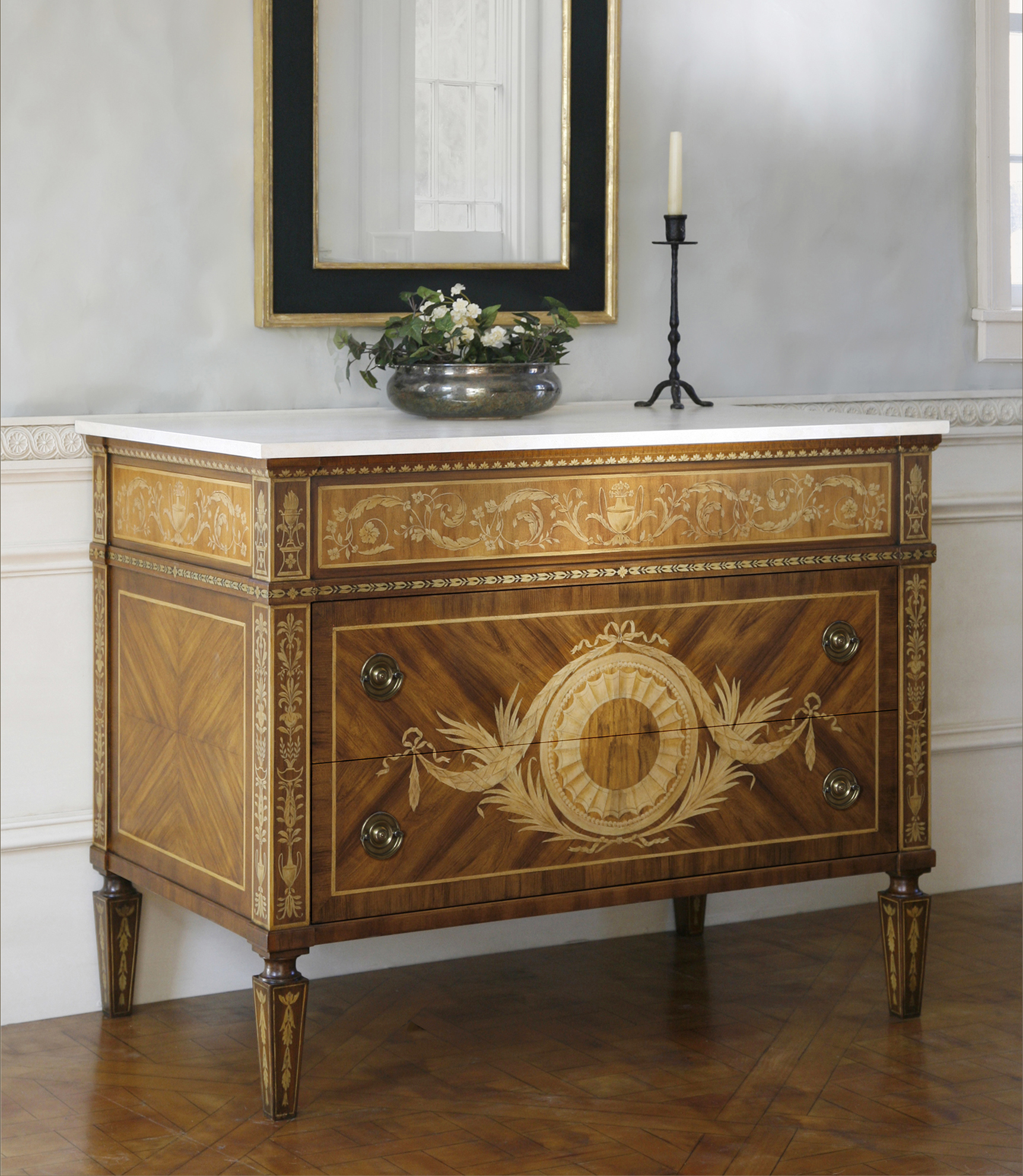
Italian Neoclassical faux marquetry commode cr

Italian Neoclassical Faux Marquetry Commode

H  34″      W  42″      D  25″

Custom commission

__________________________________________________________

ab chest 1

Pennsylvania Chest

Antique, restored for Anthony Baratta, LLC

____________________________________________________________

Neoclassical Chest of Drawers

H  35″      W  47.5″      D  19″

Antique style, redecorated

____________________________________________________________

Regency Black Lacquer Cabinet

Custom commission for Michael Whaley Interiors, Inc.

____________________________________________________________

Louis XVI White Lacquer Cabinet

Custom commission

___________________________________________________________

Louis XV Style Commode

Antique style, redecorated black lacquer finish

___________________________________________________________

___________________________________________________________

English Chest of Drawers

Antique, restored

___________________________________________________________


tv cabinet_8723wpl

Folk Art TV Cabinet

Custom commission for Anthony Baratta, LLC

___________________________________________________________

Regency Style Bookcase

Custom commission

___________________________________________________________

More Tables

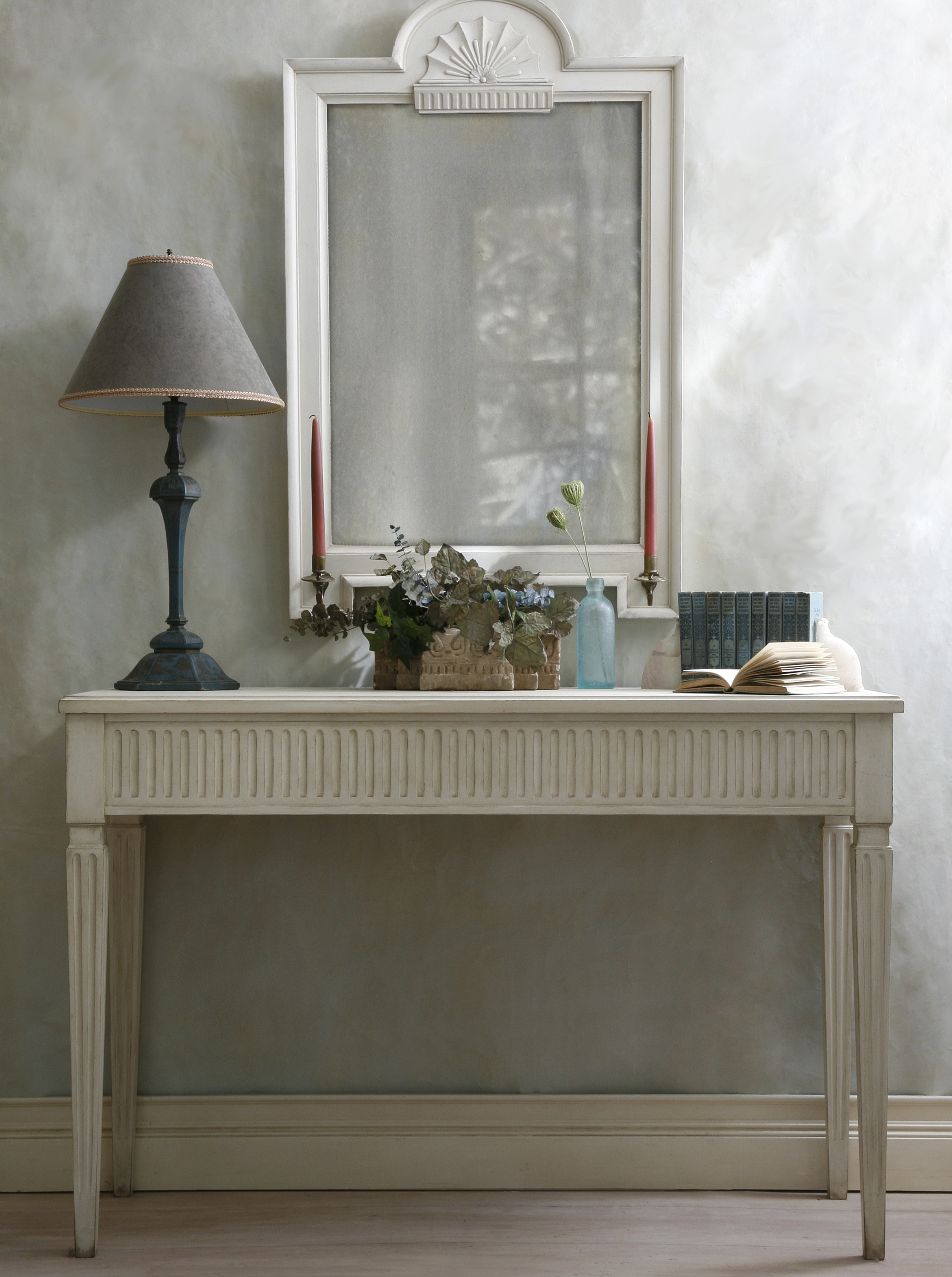
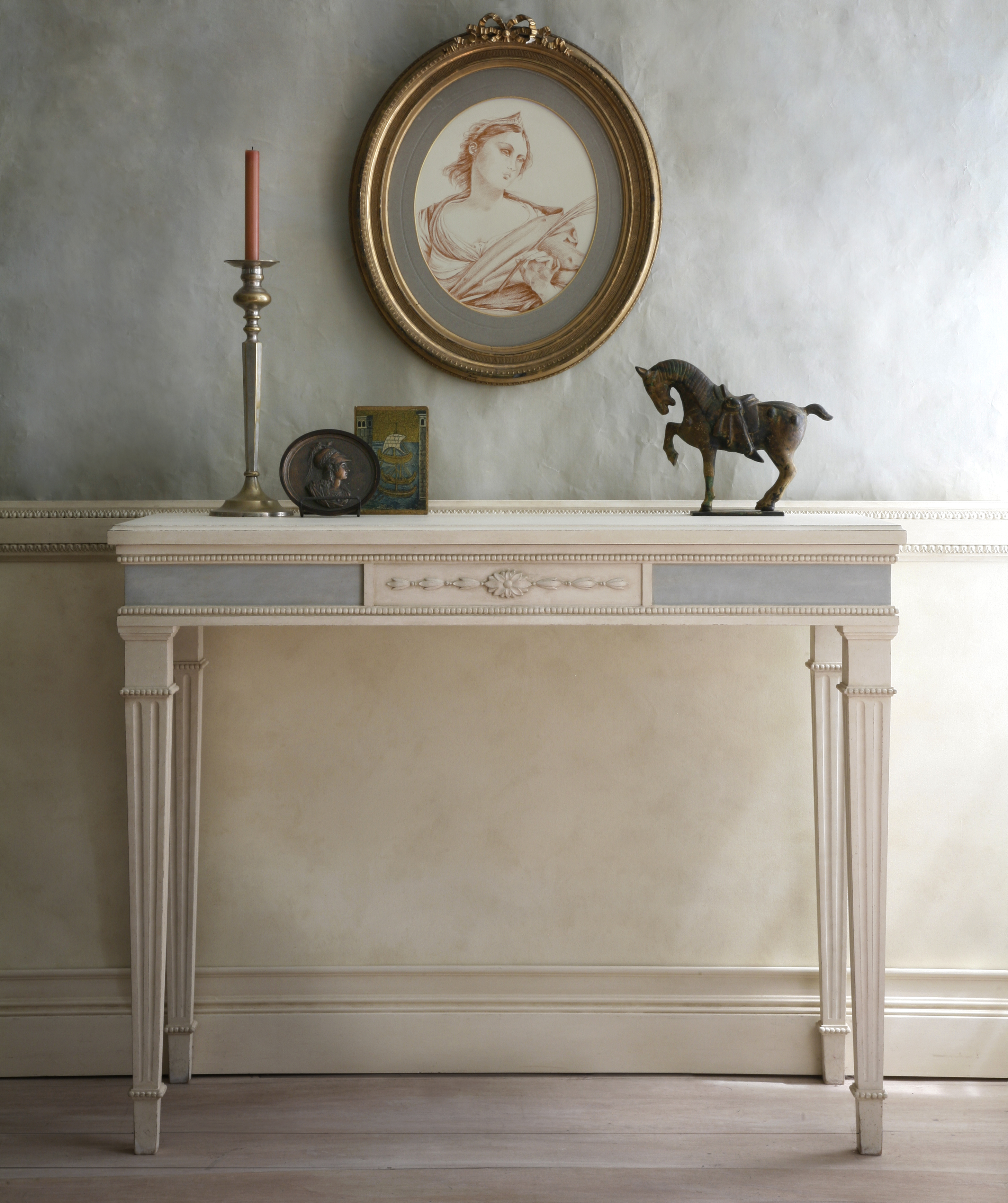
Gustavian Style Fluted Table 

H  33″      W  50″      D  19″

Click image to open enlargement window. Click image again to magnify. Use back button to return.

____________________________________________________________

George III curved console table

George III Curved Table

One of a Pair

H  36″      W  42″      D  19″

Custom commission

____________________________________________________________

Italian Baroque table__4221

Italian Baroque Table

Antique, restored.

_______________________________________________________

Italian Neoclassical Table

Custom commission

_______________________________________________________

Neoclassical center table 3984n

Neoclassical Center Table

H  29.5″      Dia.  38″

Antique, restored

_____________________________________________________________

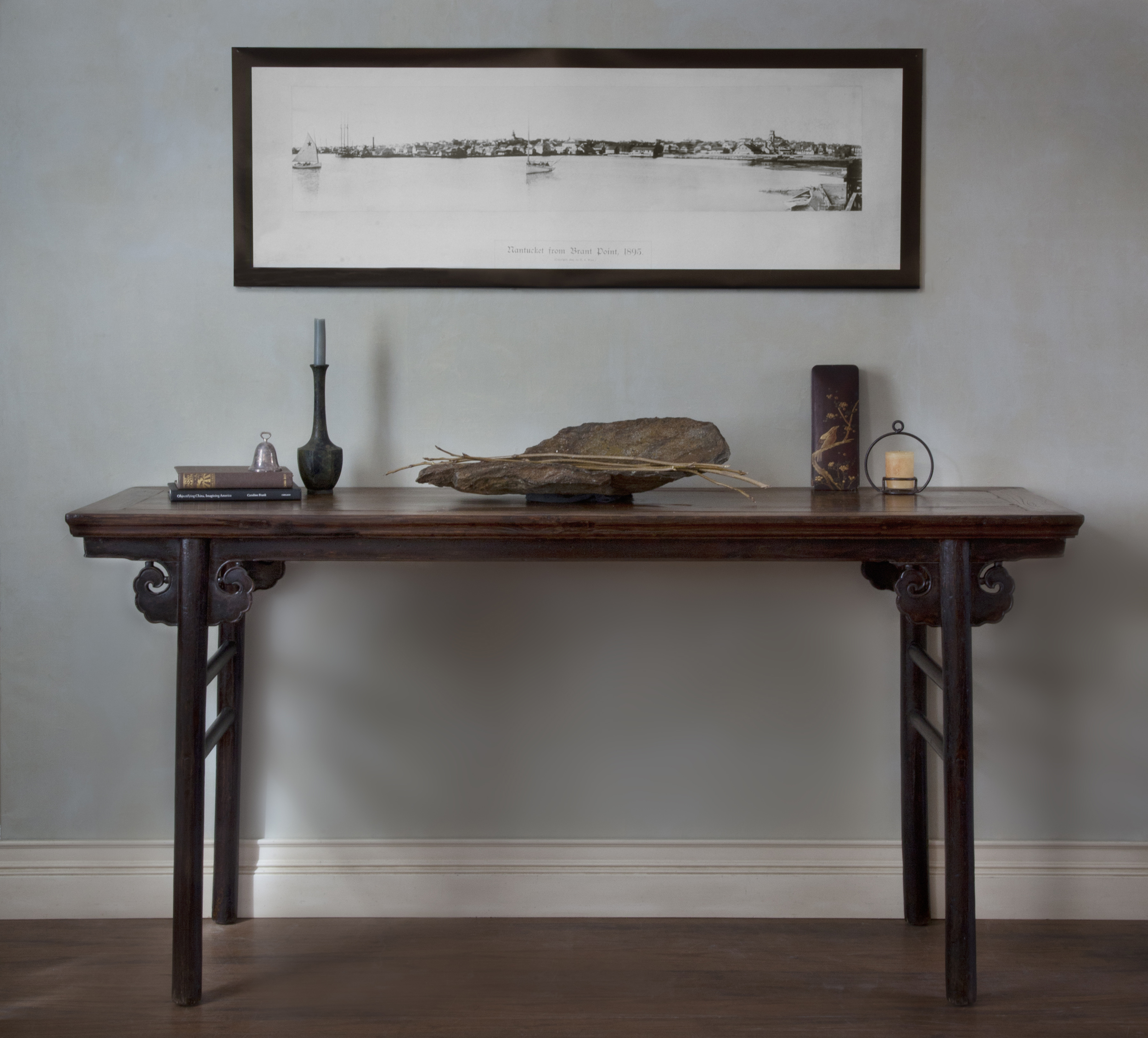
Chinese Alter Table

Antique, restored

_____________________________________________________________


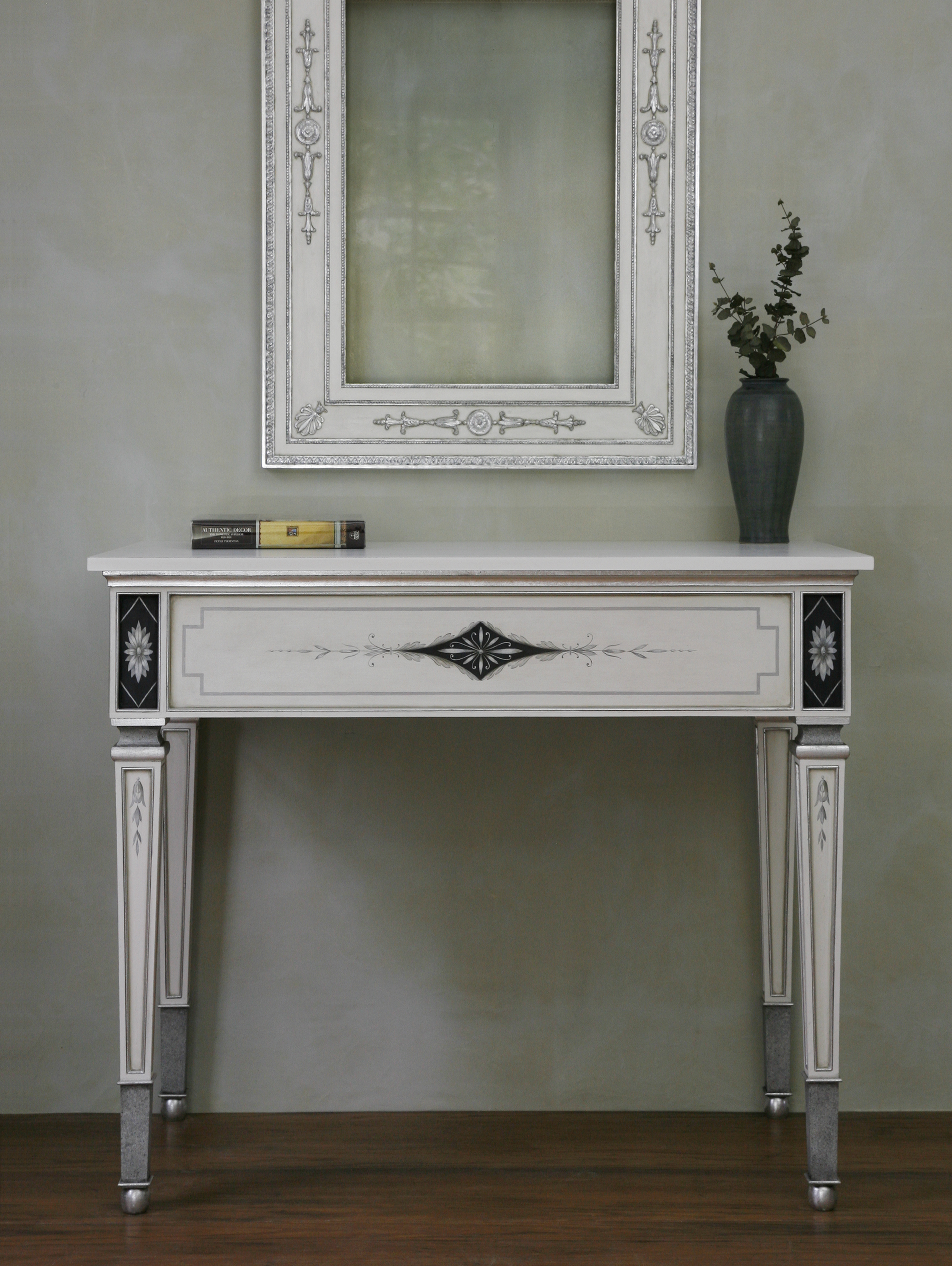
Gustavian Style Table

H  33″      W  42″      D  18″

_____________________________________________________________

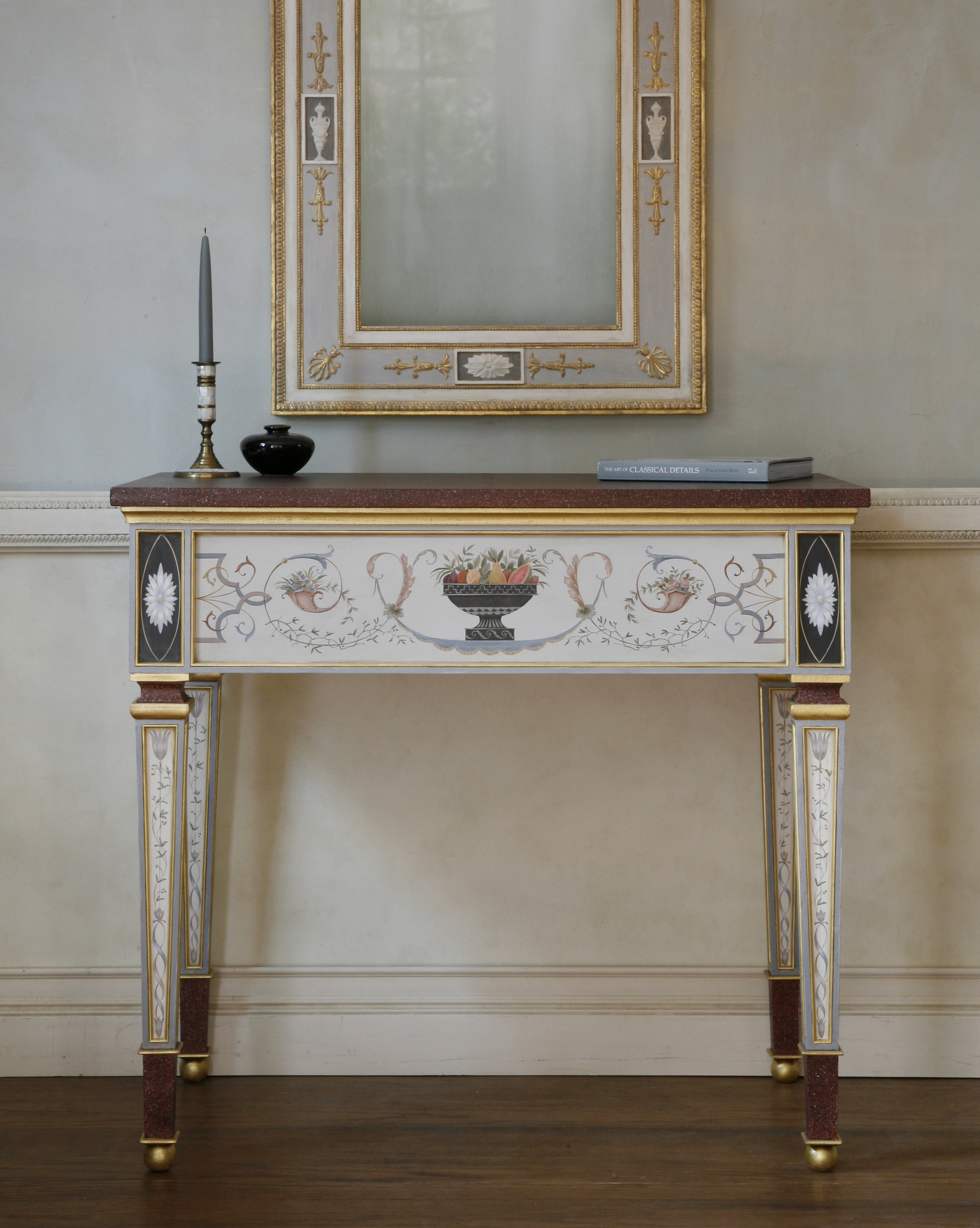
Italian Neoclassical Table

H 34″     W 46″     D 25″

Custom commission

_____________________________________________________________

About Kevin Cross Studio

Kevin Cross Studio is an art and design studio located in Redding, Connecticut, that specializes in the art of decorative painting* and gilding** as applied to interior furnishings, and the restoration of antique furniture.

Our customers include architects, interior designers, antique dealers, and private clients.

The photos shown on this site are examples of our work, which represent the various aspects of our business as described below. Most of the art work presented can be replicated, either as shown, or modified to some degree to fill a specific custom order. (For more about the photos, see the entry “About The Photos On This Site” in the navigation bar at right).

Following is a brief outline of our products and services.

Decorative Art         

We can create the following:

  • East Asian style lacquer art on panels that are incorporated into the architecture of the room.
  • Murals painted in oil on canvas in the studio that, upon completion, are mounted on the walls in a process similar to wallpaper installation.

Custom Furniture         

We can work on or create the following:

  • Furniture that is provided by the client, perhaps an antique or vintage piece, or one that has been newly built to the client’s specifications, and sent to our studio for completion of the finish work, i.e. painting, gilding, and/or polishing.
  • Furniture provided entirely by our studio, whereby an order is placed by a client for a specific piece according to their design, drawings, photographs, etc.,  with the request that we assume  production from start to finish. In this case, we collaborate with our colleagues, e.g. woodworkers, cabinet makers, carvers and turners, upholsterers, who undertake the fabrication of the furniture; the piece is subsequently sent to our studio for completion of the finish work.

Restoration of Antique Furniture         

We can restore the following:

  • Painted furniture, including furniture painted simply in one color, furniture with various styles of decorative painting, furniture with gilded ornamentation, paint decorated satinwood furniture, and East Asian style lacquer furniture (also traditionally referred to as “Japanned” furniture in England and America).
  • Gilded furniture and objects, most commonly mirror and picture frames, but also including gilded side tables and chairs.
  • Polished wood furniture, i.e. furniture made of fine hardwoods, such as walnut, mahogany, rosewood, satinwood, etc. and coated with a clear finish.

Though most of our restoration work is done in our studio, we also offer on-site furniture restoration service as well, when the relatively minor nature of the restoration in question allows for this solution. For more information about this, see the entry “About Restoration” in the navigation bar at right.

____________________________________________________________

*Decorative painting, as a type of “Decorative Art”, may be loosely defined as painting which is distinct in certain ways (e.g. intent and function) from that which is referred to as “Fine Art” painting (art created and experienced aesthetically). Briefly, decorative art is commonly thought of as being somewhat functional within itself, e.g. wallpaper; or an attribute of  something functional, e.g. a painted chair. It may also be created intentionally  for a specific location, e.g. a painted mural. On the contrary, fine art (which admittedly is more difficult to define) contains it’s meaning and value entirely within itself, i.e. it is not necessarily functional, and is usually not site specific.

Within the context of interior furnishings, examples of decorative art would include mural painting, classical designs such as the Arabesque and Grotesque, Chinoiserie,  faux finishes such as simulated wood and marble, painted furniture, etc.

**Gilding generally refers to the process of applying  a thin sheet of metal, called a leaf, to any surface capable of receiving it, e.g. wood, metal, glass, porcelain, paper, etc. Traditionally, precious metals such as gold and silver were used; with the tendency of silver to tarnish, it is now considered advisable to use a substitute such as palladium leaf or aluminum leaf instead of silver. The term gilding may also refer to the use of gold and silver in powder form.

Gilding in the decorative arts usually falls into two categories:

  • “Solid gold” appearance

The leaf may be applied to an object over the entire surface, with the intention of presenting the object as if it were actually made of gold. Familiar examples of this would be gilded wood picture and mirror frames, or the gilded metal hardware and mounts of fine French furniture.

  • Precious metals as art “pigments”

Gold and silver, in leaf or powder form, may be used as part of a painting process, where the design is painted on the surface with a specific adhesive, and the leaf or powder is then applied only to the painted area. We see this on furniture, lacquer work, illuminated manuscript, sign painting on wood and glass, etc. Alternatively, leaf can be applied to a surface to serve as a ground color under, or around, the painted art work. Gold leaf is used extensively in this manner on Momoyama-Edo period Japanese screens. This effect also appears in some Renaissance art, and later in some Arts and Crafts designs.

Philadelphia Classical Chair Link

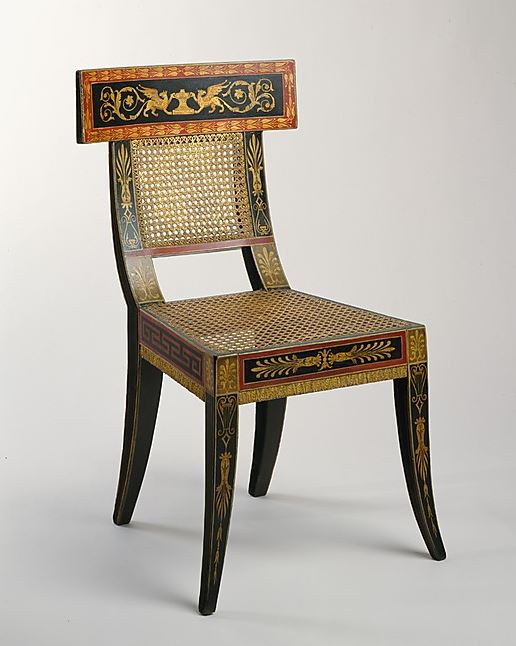
Philadelphia Empire Chair MET WPL

Philadelphia Classical Chair

Photo Metropolitan Museum Metmuseum.org

This chair model is probably one of the most familiar pieces of American painted furniture; originally from a set of 16, it is featured in many books, and a few from the set are on display in prominent museums. When I first saw it, I was captivated, and wanted to create one for myself.* After producing a pair, a client saw them and commissioned a set of 12 for her dining room. The photo below shows the completed set, together with the first pair:

14 Philadelphia Classical Chairs WPL

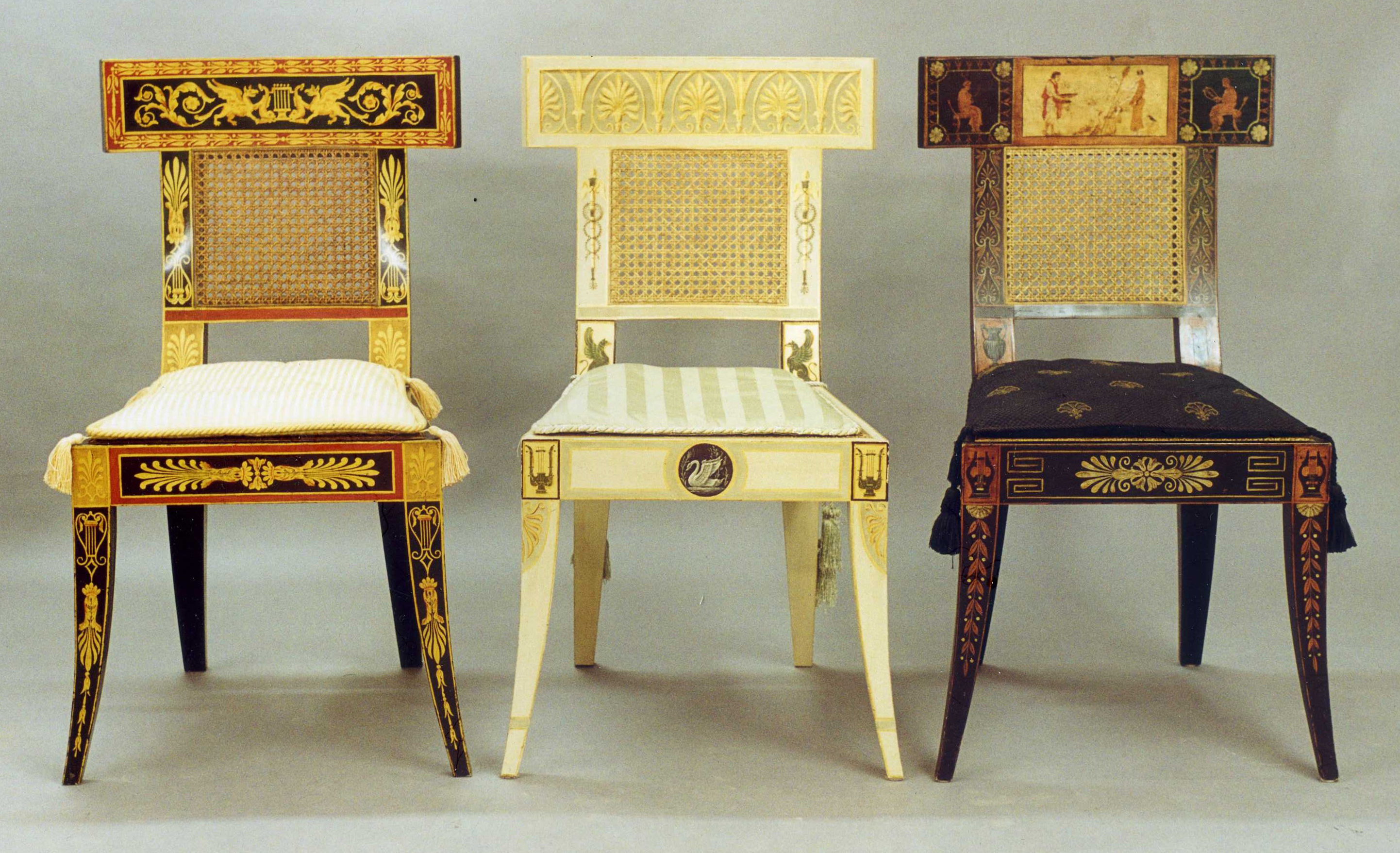
At the same time as the 12 frames were built for the custom order, I also had another pair built for myself. The beautiful simplicity of the form seemed to allow for a variety of Classical treatments. I had a few ideas in mind, the results can be seen in the following photo:

3 Philadelphia Classical Chairs WPL

* Note: The original chairs have a band of carved and gilded leaf ornament under the seat rail. I omitted this element from my own chairs, simply for personal preference.

Baltimore Armchair 10 House Images Link

House 1 WPL

Baltimore Armchair 10 House Portraits

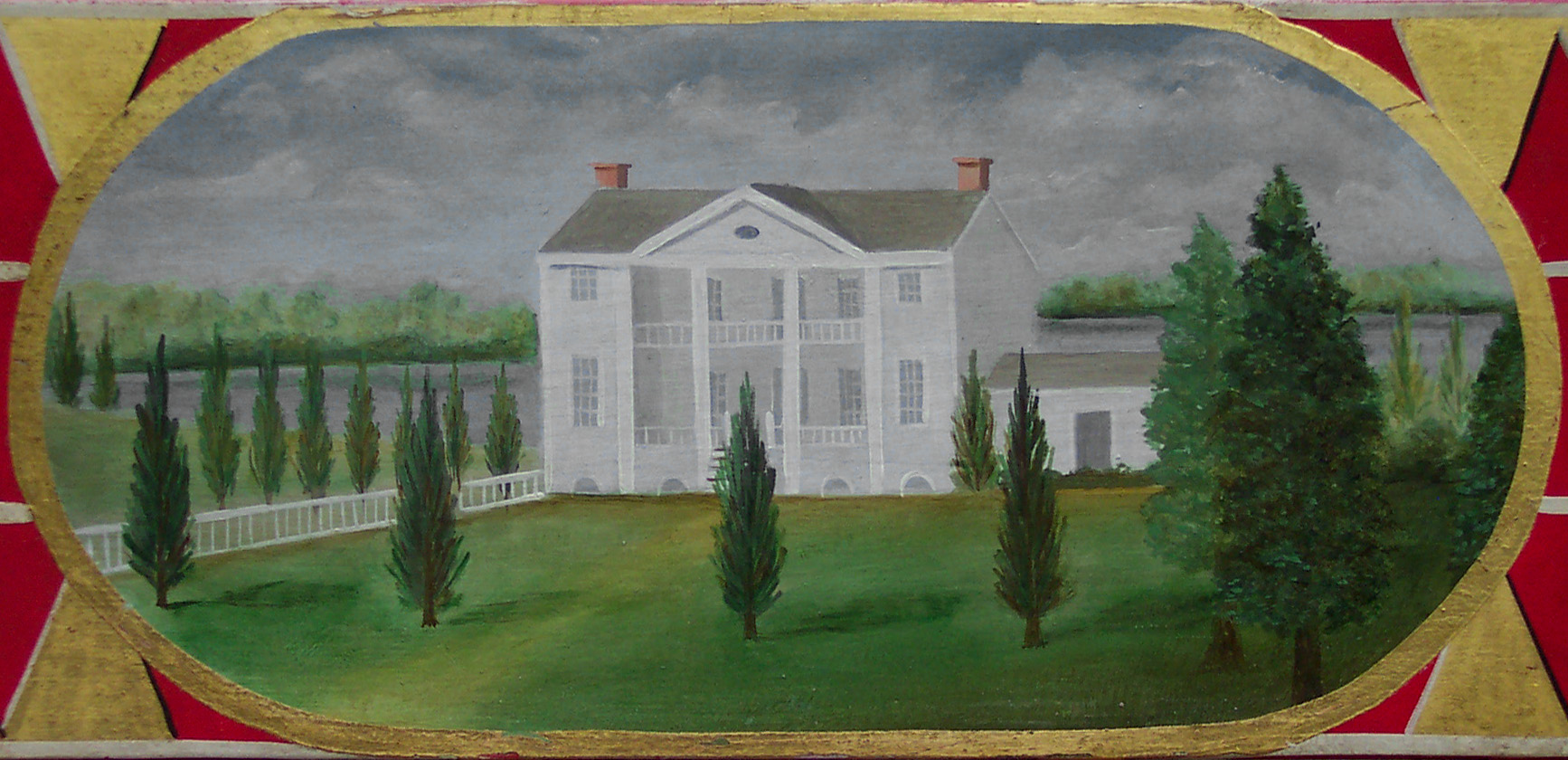
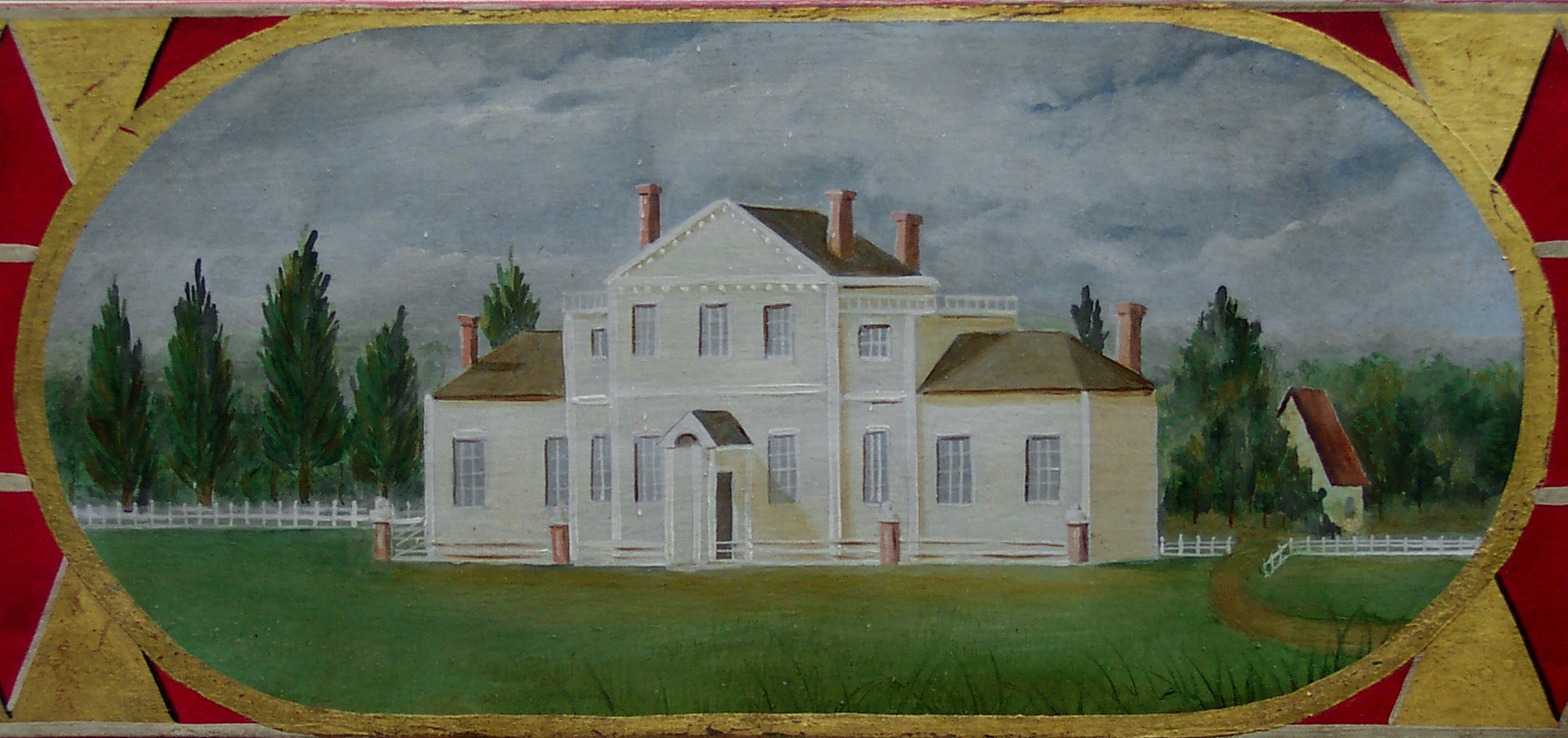
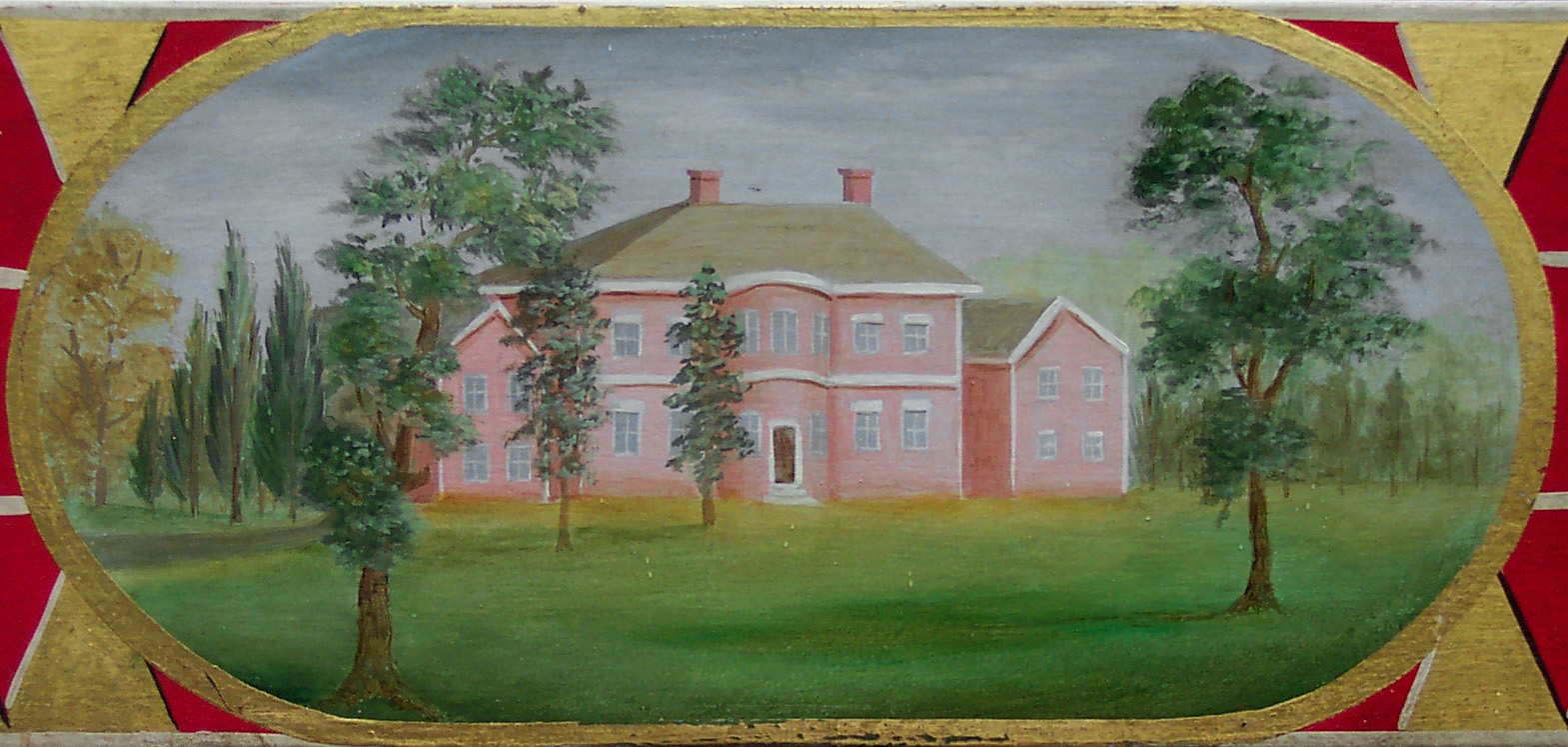
Each chair in the set of 10 has a different “house portrait” painted on the back. The images were painted in a somewhat naive style, in an attempt to replicate the look of the original antique furniture from which they were taken.

__________

House 2 WPL

__________

House 3 WPL

__________

House 4 WPL

__________

House 5 WPL

__________

House 6 WPL

__________

House 7 WPL

__________

House 8 WPL

__________

House 9 WPL

__________

House 10 WPL

______________________________

Sheraton Painted Armchair Link

Sheraton painted armchair  V&A

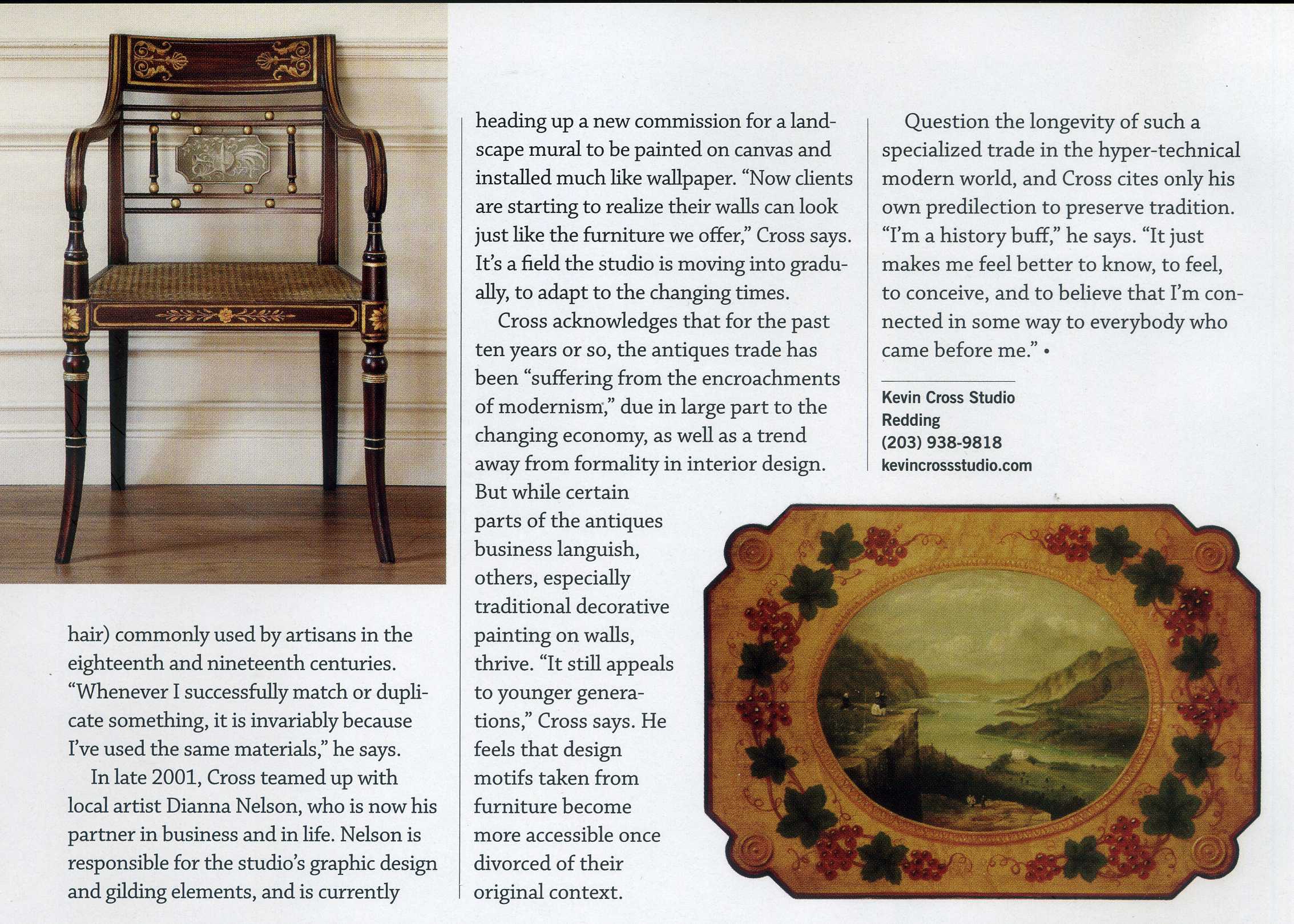
Sheraton Painted Armchair 

Victoria & Albert Museum

__________

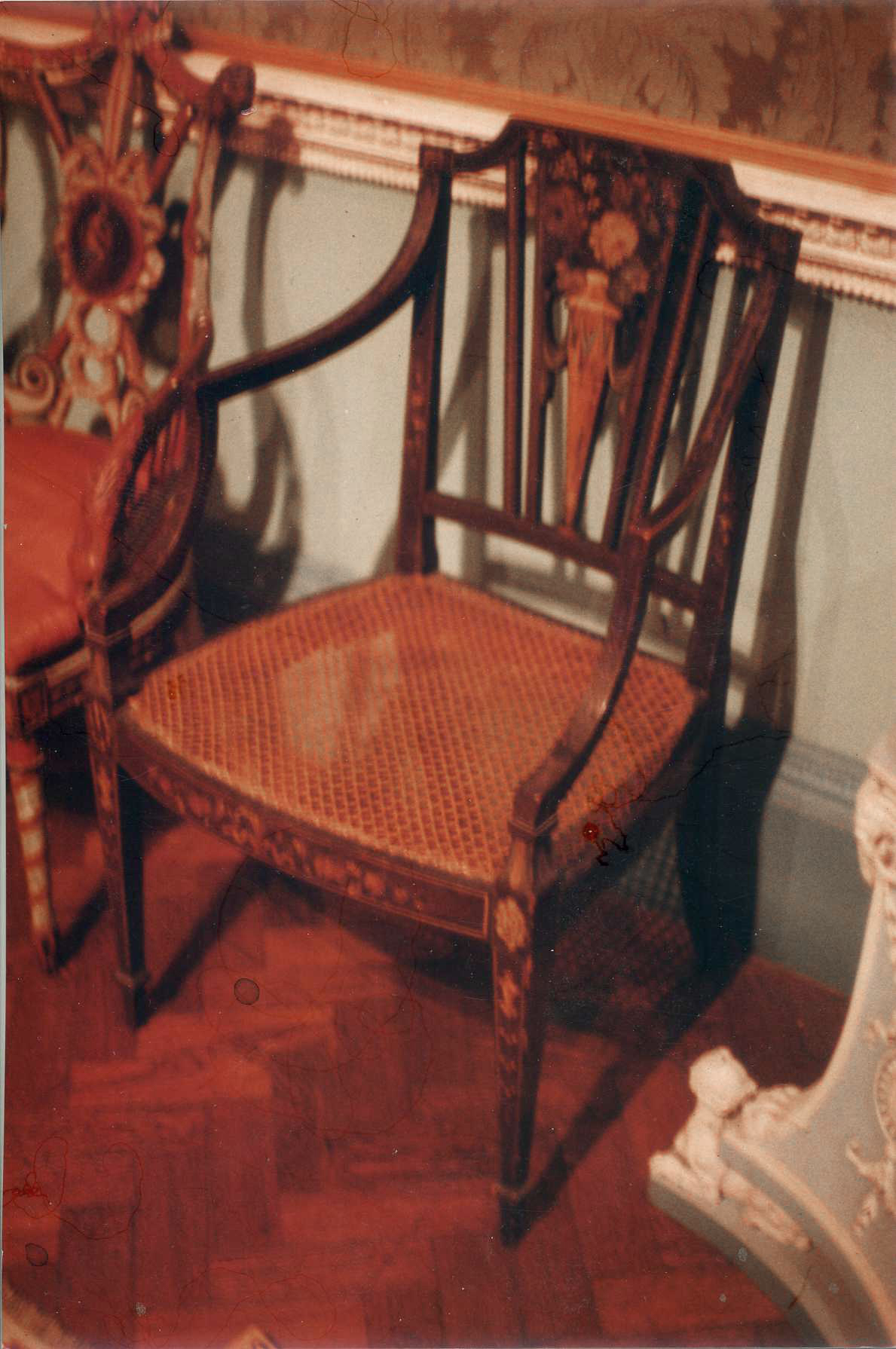
When I first started working with antiques in NY in the 1970’s, there were few books on the shelves about  furniture other than American. Those that were available usually focused on wood finishing, or basic restoration, nothing on painted furniture. Eventually, as I began to haunt used book shops, I found older out-of-print books, many published in England, with black and white photos, very little in color. I soon noticed that the authors used the same photos repeatedly, usually from the Victoria and Albert Museum, the Metropolitan Museum in NY, or selections from old English collections. By the 1980’s this began to change; the numerous colorful books by Jocasta Innes were full of information about painting, “The Best of Painted Furniture” by Florence de Dampierre was a milestone, full of color photos of all kinds of antique  furniture. In the ensuing years,  the publishing pace increased, many good books appeared, and ultimately, with the internet endless information became available.

One thing that did not change, however, was the photo of the chair shown above. It appeared in many books, always in black and white. I was determined to replicate it for myself, and eventually, in the early 1990’s, working from photos, I drew the plans and elevations as accurately as I could, and asked one of the woodworkers with whom I was associated to build it for me. As I proceeded with the decorative painting, I went by “educated” guesses in interpreting what colors were most likely used on the original. For the most part, I relied on the information gained by studying the pair of shield back armchairs that were at that time on display in the English rooms at the Met.

Basically, I was OK  with the results, as much as could be expected, and even produced a set of four armchairs for a client based upon my model. Then in 1996, I had an opportunity to go to England for a few weeks. Landing in London, I hastened to the museums, first stop being the V & A.

Sheraton painted armchair  V & A color

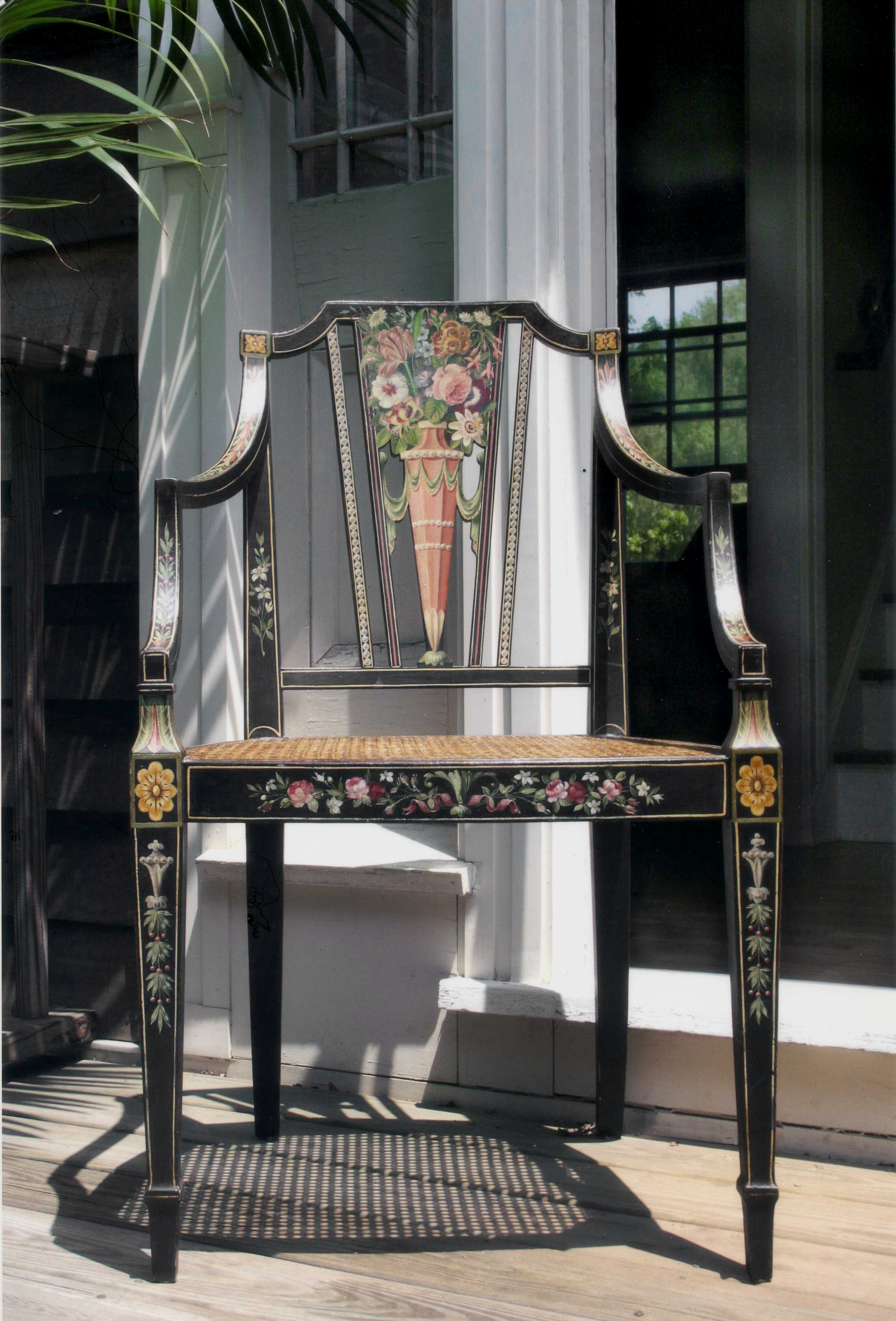
As I entered the English furniture rooms, looked around and saw the chair, my first glance showed, to my chagrin, that I had guessed wrong on one crucial area. Working with the typical palette of  red/pink (terracotta) and green (in the celadon range) with small amounts of white/gray and pale yellow, I had everything reasonably correct, except that I had reversed the colors of the urn and drapery swags on the splat. My chair had a green urn with pink swags; as my grainy photo above shows, the original chair had a pink urn with green swags.

Upon my return, there was no way around it, I felt compelled to fix my mistake. I repainted the urn and swags on my own chair, and of course, it looked so much better.

Sheraton painted armchair C B

__________

As a foot note to this story, I will add the following.

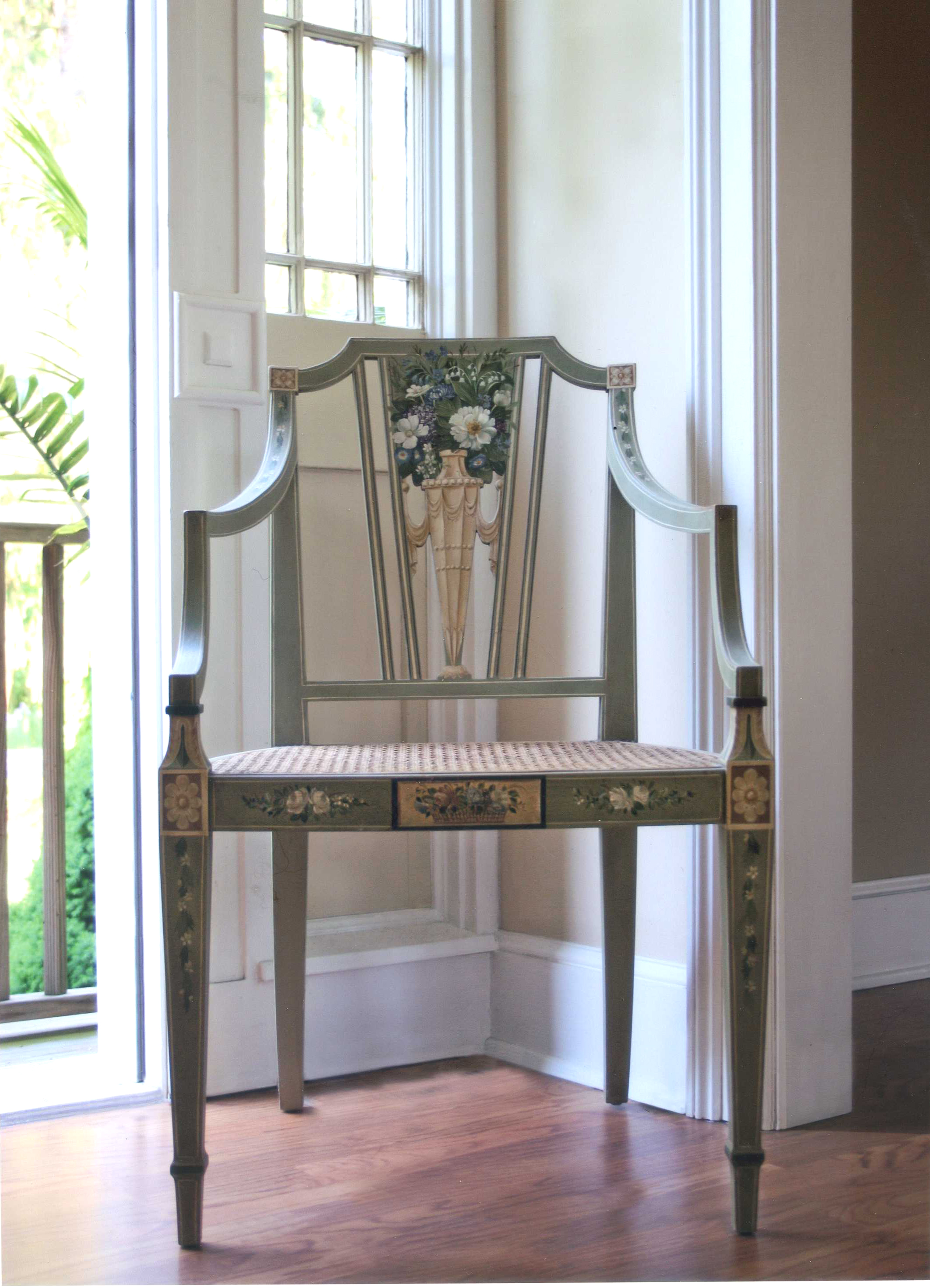
At the time I replicated this chair, I actually had two frames made; one of them I painted black and floral as described above, the other was treated in a satinwood (polished  maple) and floral finish. As I corrected the colors in the black one, I decided to do something different with the other, so I repainted it as shown in the photo below.

Sheraton painted armchair C G

Eventually, a client saw this version of the chair, liked it, and ordered another to make a pair.

I still have the black one.

______________________________